



 Back
Back 
Favini achieves an important milestone: 120 years since the Favini family took over the paper mill at Rossano Veneto and the family name became a brand.
Already active in the paper industry in Maslianico, Lombardy, the family, led by Attilio Favini, acquired the paper mill in Rossano Veneto in 1906, which is now the headquarters of Favini Srl.
Following Attilio’s death, management passed to his wife Emilia, who played a central role in ensuring the company’s continuity alongside her son Luigi. During this phase, the management structure was strengthened with external expertise: Manager Magnani arrived from Bologna, overseeing a period of consolidation and development that spanned the wars until 1950.
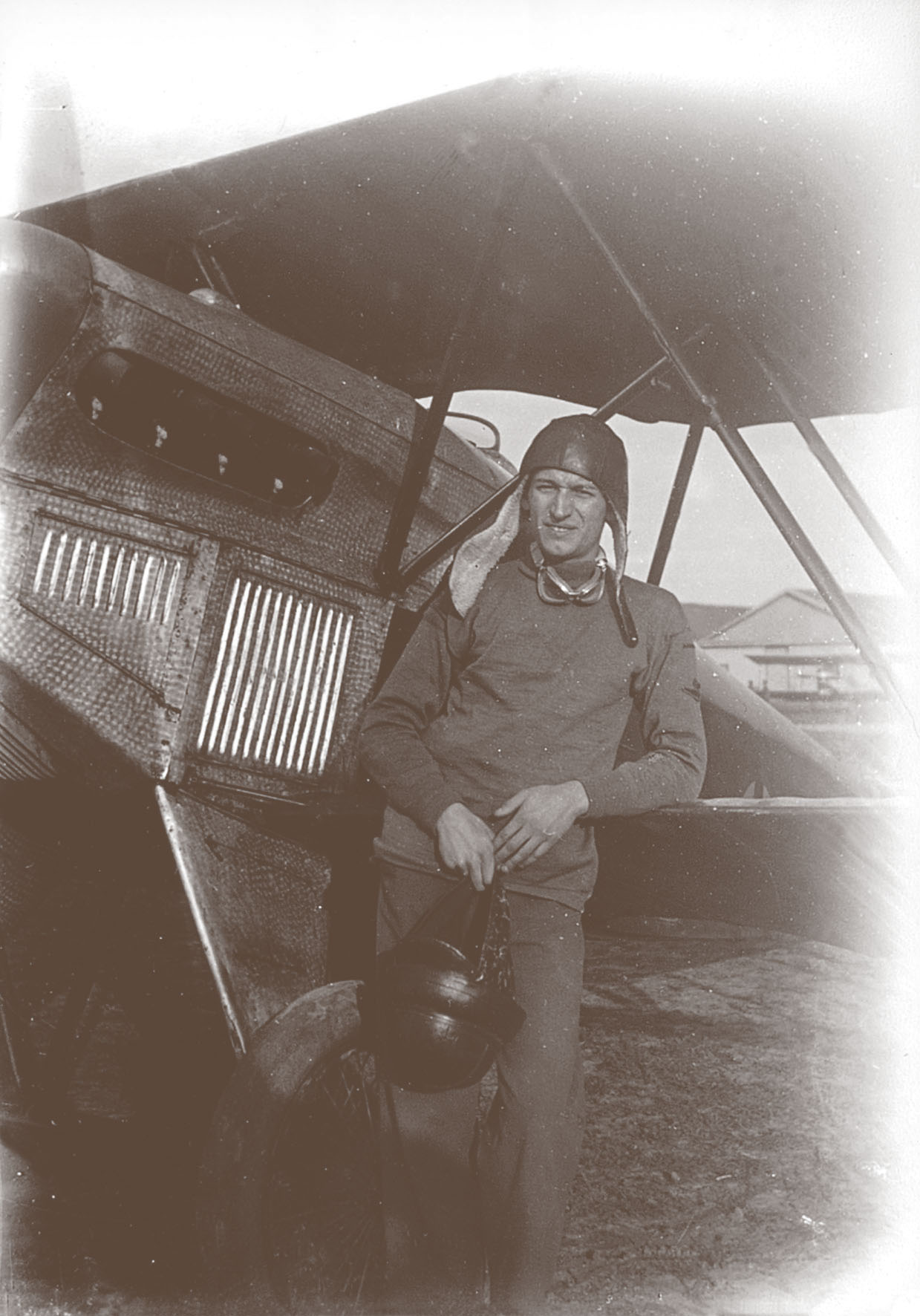
Subsequently, Attilio and Emilia’s other son, Andrea, joined the company; after serving as a colonel in the Royal Air Force, he contributed to the paper mill’s subsequent industrial expansion phase.
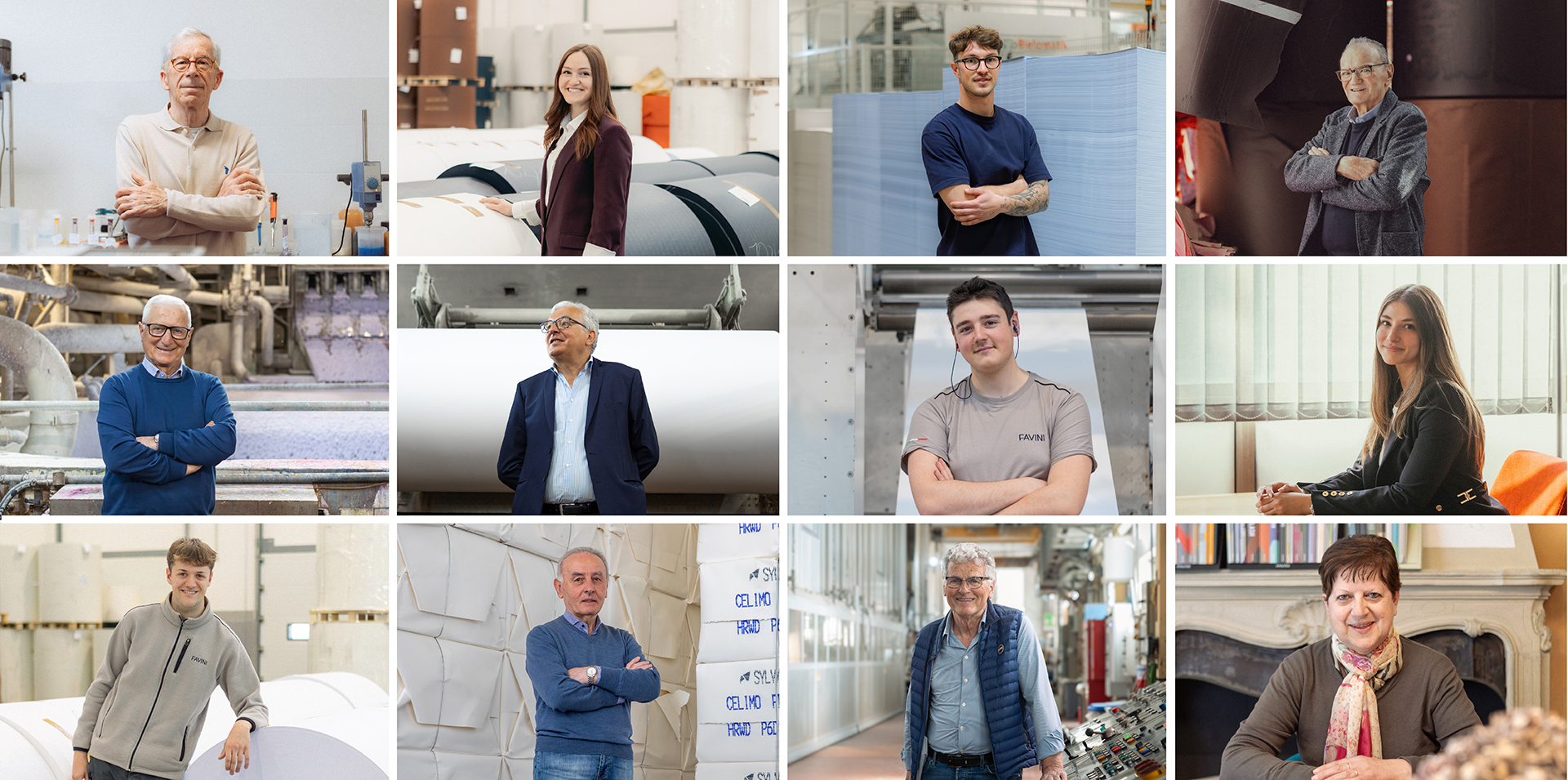
From this point onwards, the more recent history has been reconstructed through the testimonies of those who have worked at the company over the years.
The growth of the factory
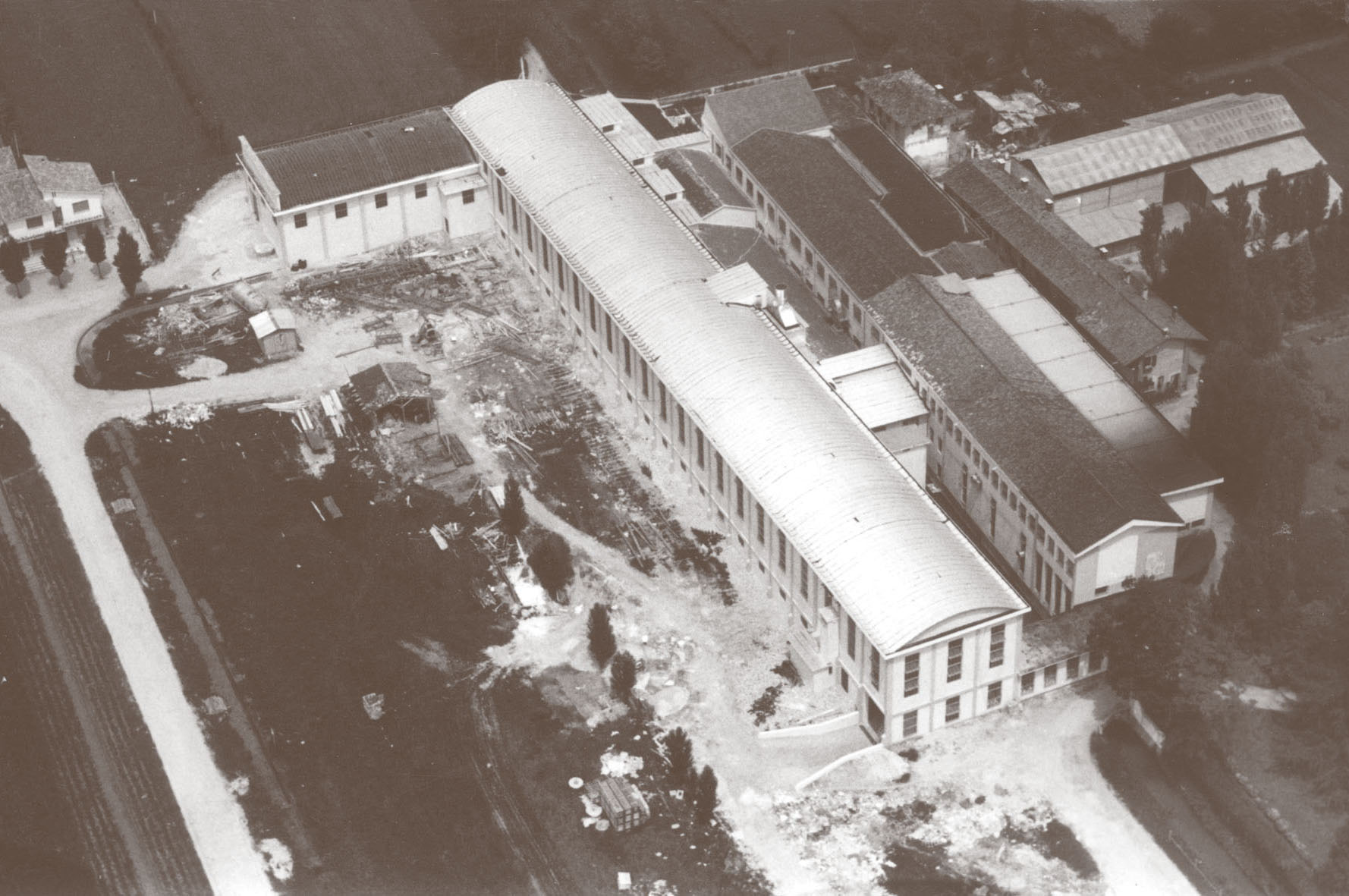
In the 1960s and 1970s, the paper mill experienced a period of rapid growth. Paper machine No. 1, installed around 1955, marked the start of the industrialisation of production.
Alongside this was paper machine No. 2, which is no longer in operation, used for the production of filter paper.
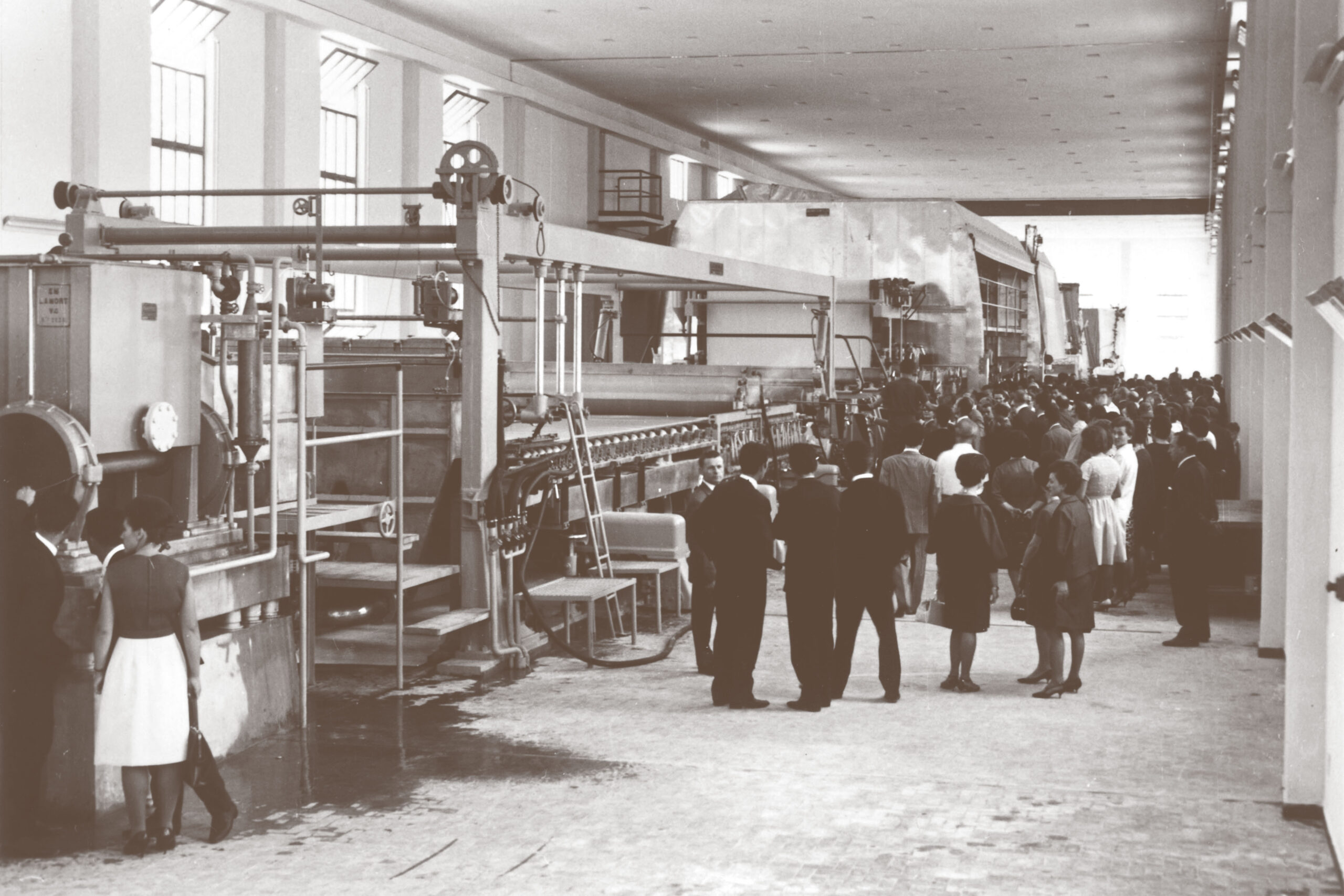
In 1963, Paper Machine No. 3 was inaugurated, marking a significant increase in production capacity and employment. A large number of new employees – around 60 – were taken on to meet the new demand for labour.
The Cartotecnica Favini division was established in the early 1970s, following a transformation of the production model – which now included paper products for schools – and the evolution of the company’s internal structure.
Further growth was driven by the acquisition of the Crusinallo paper mill (Piedmont) in the late 1990s.
Colonel Andrea Favini
Colonel Andrea Favini, a key figure in the company’s history who led the paper mill from the end of the Second World War until around 1995, is remembered as an authoritative figure who was, at the same time, very close to the mill’s employees.
Testimonies reveal a direct relationship with people, characterised by care and presence even outside the factory. During the interviews, an anecdote was told concerning an outing by the marching group, which recalls him along the route in a simple yet significant scene:
“During the ‘4,444-step walk’, he waited for us along the route. He arrived with a flask of wine and some sandwiches. That was just the sort of person he was; always there, even outside the factory.”
In some accounts, his ability to keep his promises also comes up: a former employee recalls how, after an initial interview that took place before he had reached the minimum age for a contract, he was called back to his great surprise when he turned 15, exactly as he had been promised.
Simple yet significant episodes that paint a picture of a respected figure who cared deeply for the people in his company.
Emilia, alongside Attilio and the establishment of the new paper mill
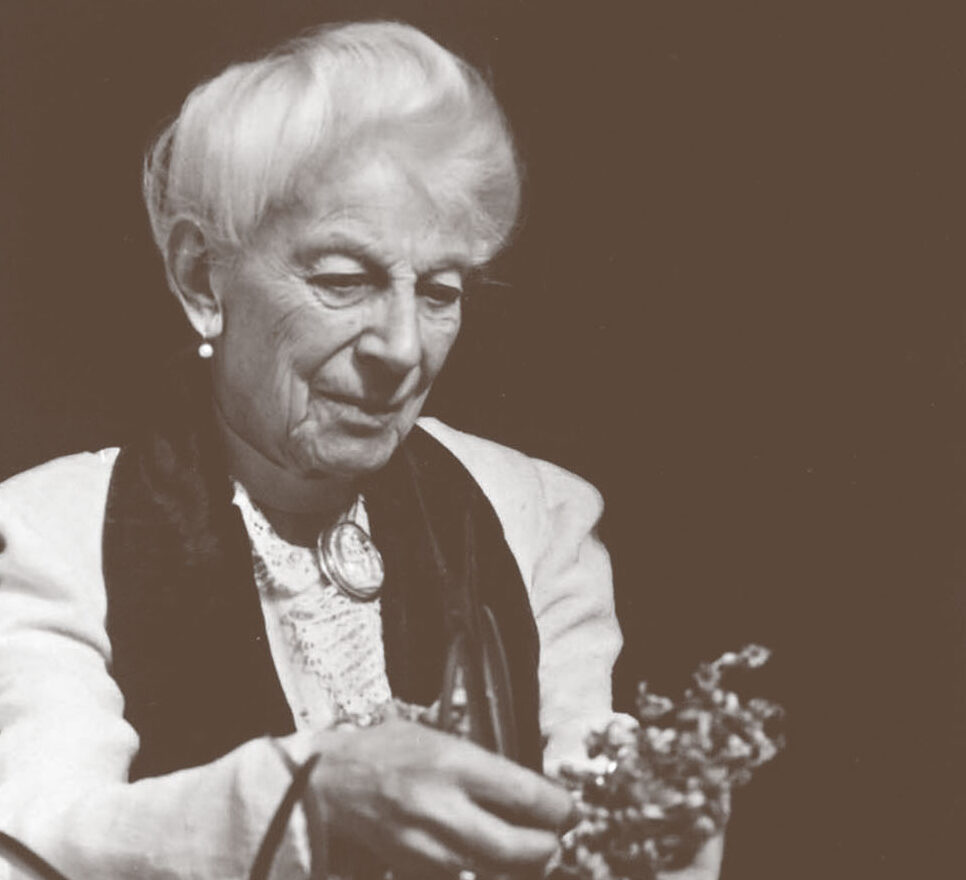
The memories of the former employees also mention Emilia, the wife of Attilio Favini, the man who decided to acquire the paper mill in Rossano Veneto.
Following her husband’s death, she found herself at the helm of a company still in its growth phase, at a time when women’s roles in business were often marginal. In this sense, her contribution was ahead of its time, as she played a central role in ensuring the company’s continuity.
Those who knew her remember her as a constant presence in the company: A professional and compassionate figure, closely involved in the day-to-day running of the factory right up until the final years of her life.
Day-to-day work
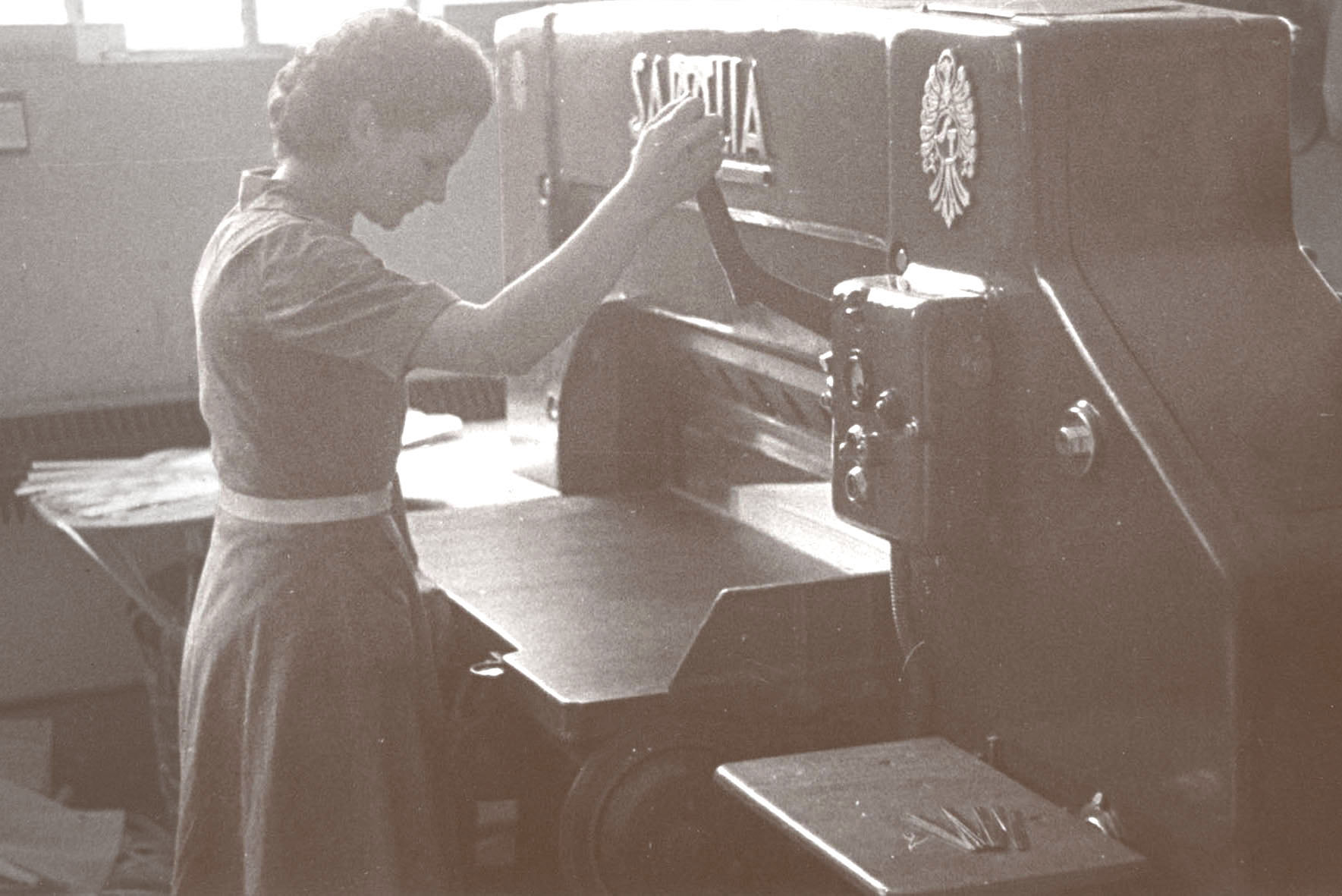
Many former employees say they started working at a very young age – as young as fifteen – and went on to hold various roles within the factory over the years.
Work was less structured than it is today, and people joined the company with less formal training, partly because there were no specific training programmes for the paper industry. Learning took place directly on the job, with employees rotating through various departments and roles to gain a thorough understanding of the paper-making process.
Innovation and change
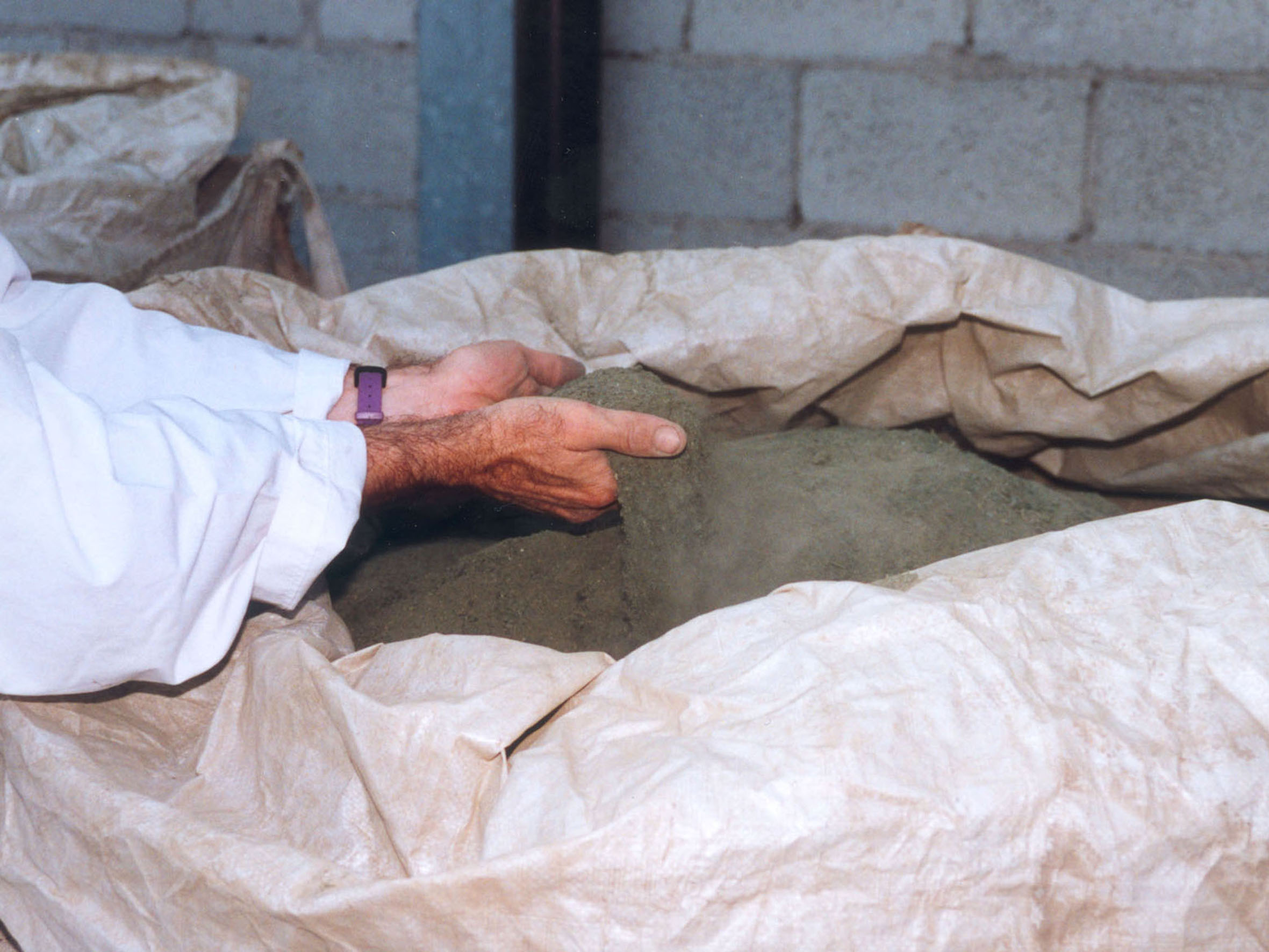
The paper mill’s evolution has been a journey of continuous change, built up over time. During the interviews, people affectionately recalled the establishment of the Research and Development department, whose initial focus was on dyes and better alternatives.
Over time, experiments began on new fibres such as seaweed. In fact, Alga Carta was patented in 1992.
At the same time, the mill introduced environmental and technological improvements, ranging from reduced water consumption to biological purification systems.
Life around the factory
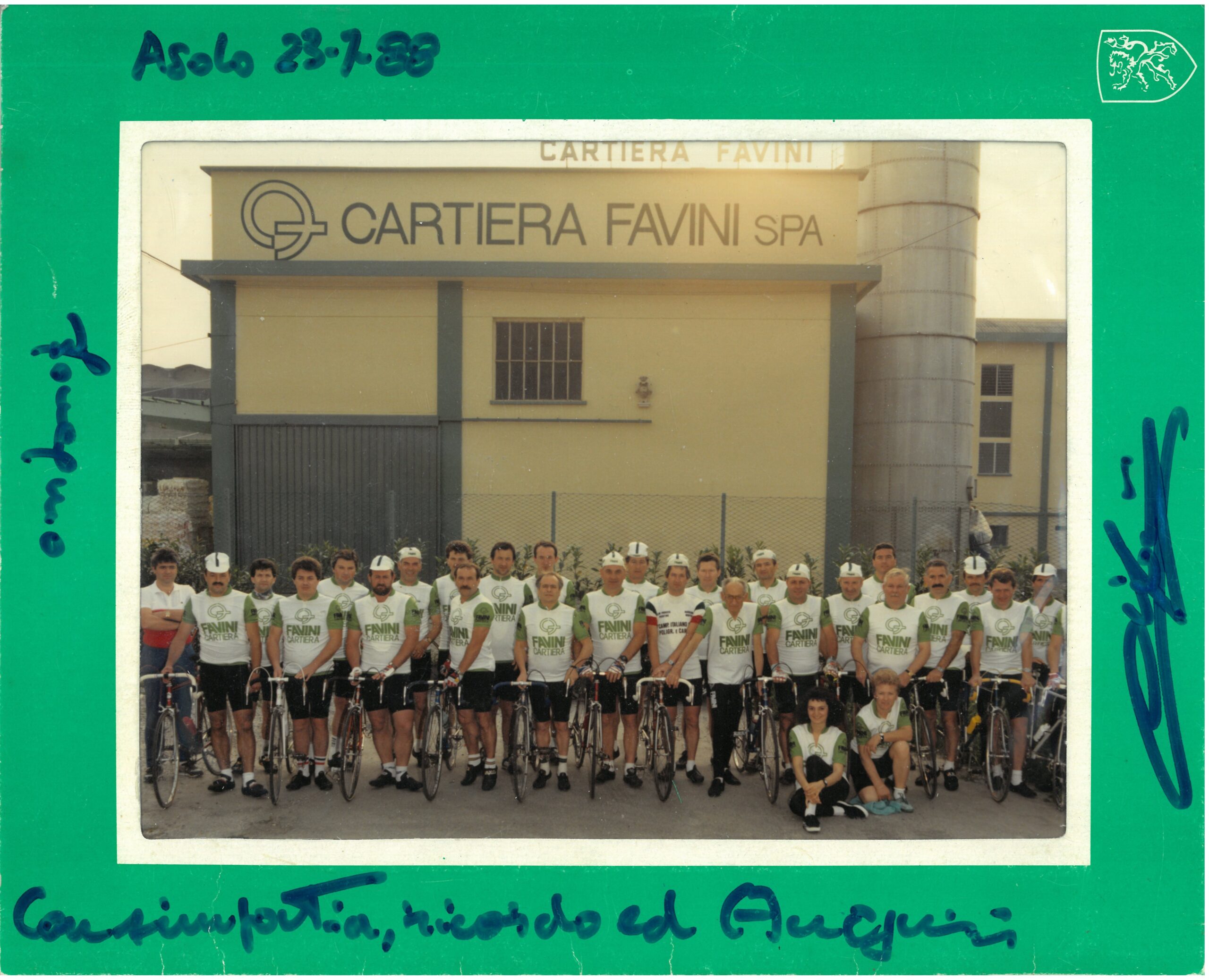
A real community grew up around the factory, centred on sport, homes built by the employees, vegetable gardens and everyday social interaction. It was not uncommon for people to meet up outside of work, and there were various sports groups, including a cycling club.
Work thus became an opportunity for socialising and a sense of belonging, as well as a productive activity.
People today
Today, technologies and processes have changed, but those who work in the company continue to breathe in that history and become part of it.
The testimonies gathered have enabled us not only to retrace some of the key stages in Favini’s development, but also to understand how this history was experienced by the people involved.
Our thanks go to those who have shared fragments of the company’s history, including anecdotes, memories and significant moments from their time at Favini.
Among them, a special thank you to the former employees: Mario Baggio, Iginio Bordignon, Orazio Cavallin, Antonella Ferraro, Armando Marchiori, Gianni Scapin, and Giuseppe Zurlo.