

Raw materials and waste
The protection of natural resources
CELLULOSE FROM TREES

Forests are one of the most precious resources at our disposal: they provide oxygen and contribute to climate change mitigation by absorbing greenhouse gases; they are a source of livelihoods and sustenance for many indigenous populations; and they contain the majority of the Earth’s animal and plant biodiversity.
Deeply conscious of these facts, Favini has decided to contribute to the conservation of the planet’s green areas in line with its sustainability principles and ethics.

100% of the cellulose Favini uses in its papers is recognised by the FSC™ (Forestry Stewardship Council, certificate code FSC-C001810) as certified according to its Chain of Custody (COC) or Controlled Wood (CW) standards. Favini categorically refuses to use raw materials originating from illegally felled trees or from areas where workers’ civil and human rights are violated or where International Labour Organisation (ILO) principles are ignored.
The cellulose Favini uses originates from Europe and Latin America.
Favini offers a concrete example of how high-quality paper can be produced by adopting a responsible sourcing.
Alternative fibres
We are constantly searching for new fibres that can be used as alternatives to traditional tree cellulose in the production of our paper.
The Tree Free paper range is produced using renewable non-wood biomass, specifically fibres originating from annual plants such as bamboo, bagasse and cotton linters.
Sparto, on the other hand, is made using post-consumer waste, fibres derived from esparto grass and bagasse, the latter being a by-product of sugar cane processing.
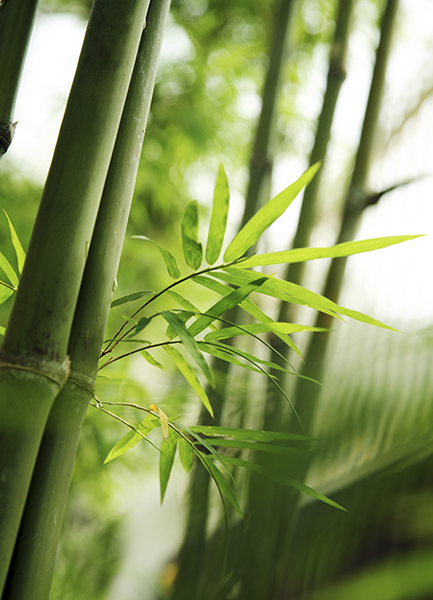
Bamboo is a renewable resource belonging to the grass family. Some species grow very rapidly and can contribute to carbon absorption and storage. However, the environmental benefits vary depending on the species, location and cultivation practices.
Cotton linters are the short fibres that remain attached to cotton seeds after the long fibres used for spinning have been removed. Due to their short length, they are generally unsuitable for conventional spinning. However, they are a valuable by-product of cotton processing and are used as a source of cellulose for regenerated fibres, speciality papers and a wide range of industrial applications.
The Sparto range uses fibres obtained from the plant of the same name (Stipa tenacissima), a perennial grass native to the arid and semi-arid regions of the Mediterranean. Adapted to conditions of limited water availability, it can grow without irrigation and requires minimal cultivation.
As a renewable and biodegradable resource traditionally used in papermaking, it also helps protect soil from erosion and contributes to combating desertification.
PRE AND POST-CONSUMER RECYCLING
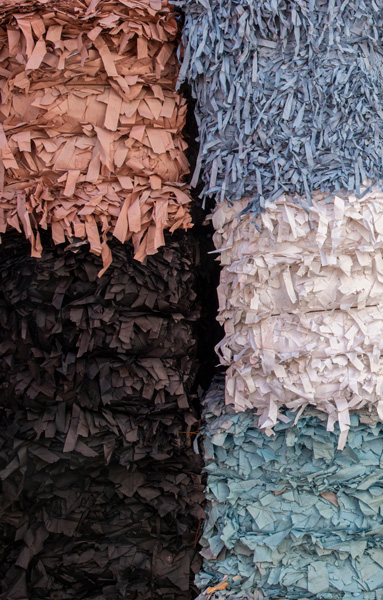
And there’s more. Further demonstrating its commitment to protecting the environment, Favini reuses pre-consumer waste, which is generated during its own or third-party manufacturing processes, and post-consumer fibres in its product lines.
On average, these materials make up 7% of all the cellulose Favini uses. Thus, the disposal of a reusable resource is avoided, decreasing reliance on virgin raw materials. The top recycled line is Shiro Echo, the FSC™ Recycled-certified eco-friendly paper made of 100% recycled fibres.
UPCYCLED RAW MATERIAL
Great attention is also paid to alternative raw materials. Over the years, our commitment to the circular economy and upcycling has driven us to explore innovative solutions for transforming by-products into valuable raw materials.
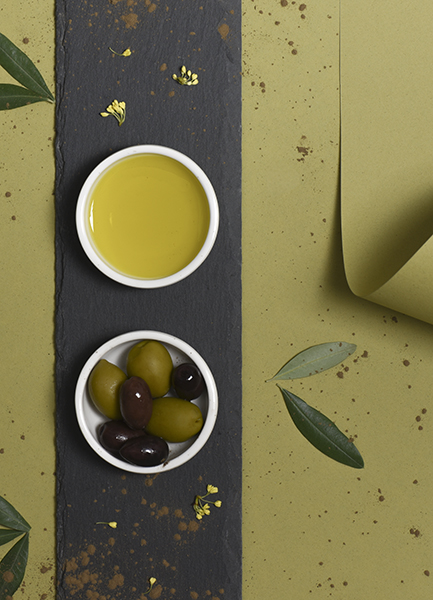
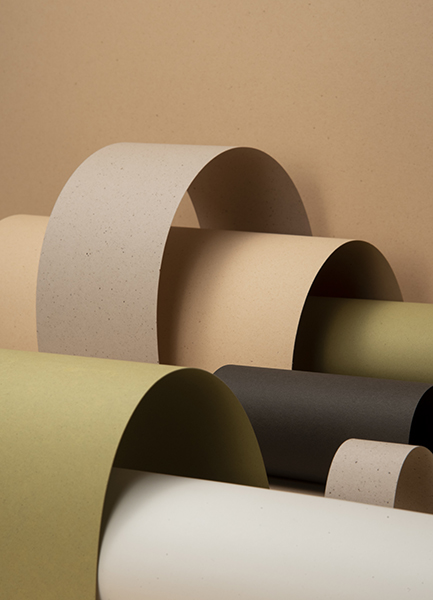
The first product created with the circular economy in mind was Alga Carta patented by Favini in the 1990s and made using the algae that infest the Venice Lagoon.
Then came Crush in 2012, a range of papers created from agro-industrial waste that decrease the need for cellulose from trees by up to 15%.
In 2015, Remake was launched as a way to redeploy waste from the leather goods industry, which makes up 25% of the materials needed to produce this paper.
The Refit range was launched in 2019 and reuses manufacturing residues from the wool, denim and cotton industries, which make up 40% of its raw materials.
What’s next?
By upcycling we mean the transformation process that leads to the creation of new objects of greater value than the original material starting from old products, useless objects or waste materials. This is why we also speak of “creative reuse”.
By recycling, on the other hand, we mean a similar process, but which leads to the production of objects or materials of equal or lower value to the starting point.
Both concepts are linked to the principles of the circular economy, a production and consumption model in which waste becomes resources.
Industrial symbiosis is the process in which traditionally separate industries integrate their processes to promote competitive advantages through an exchange of material, energy, water and, in the case of Favini and its innovative papers, the by-products.
The interactions generated by the industrial symbiosis established by Favini between the paper and agro-industrial, leather and textile industrial sectors have allowed the creation of new products: the papers of Alga Carta, Crush, Remake and Refit.
REDUCING HARMFUL SUBSTANCES
Favini has been consistently committed to reducing its use of chemicals and utilises chemical products in line with European regulations (Reach). Cellulose, for example, is purchased only if it has been bleached without the use of chlorine, a substance that can potentially generate dioxins. Furthermore, products that contain formaldehyde, classified as a probable carcinogen, and ammonia, which can cause severe groundwater pollution, have been eliminated from production processes. Finally, Favini’s black papers are carbon black-free.
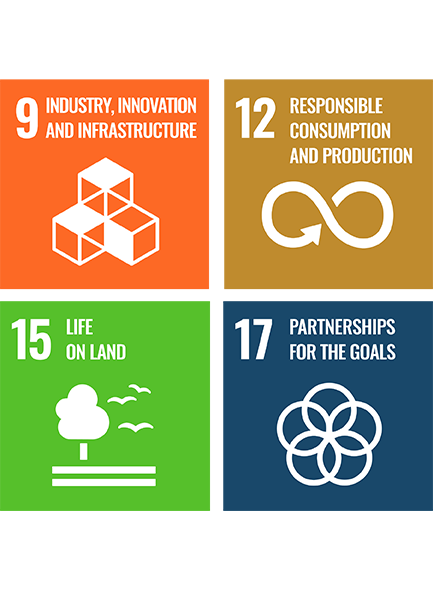
Our commitment in the selection of raw materials and waste management is in line with the Sustainable Development Goals by United Nations. In particular, our approach in this area respects the principles:
- 9 support for innovation;
- 12 promotion of sustainable models;
- 15 protection of the life on land;
- 17 foster partnerships with companies and organizations.
Explore our Sustainability areas to discover all the SDGs pursued by Favini.

COURAGE TO